What Claude Code Actually Costs When You Run Agents in Parallel
Anand B · 2026-08-12
Official pricing pages answer "what does the plan cost". They do not answer the question people actually have, which is what happens to consumption when you stop running one agent and start running four. That is a concurrency question wearing a pricing question's clothes.
Short version: burn scales roughly with the number of agents you run, so the plan you need is set by how many you will genuinely keep busy — not by how many the tooling permits.
The plans, as of this writing
Verified against the official pricing page on 2026-07-26. Treat every number here as a snapshot; this is exactly the kind of detail that goes stale, so check before acting on it.
| Plan | Price | Claude Code |
|---|---|---|
| Free | $0/month | Not included |
| Pro | $17/month annual, $20/month monthly | Included |
| Max | From $100/month, in 5x or 20x usage tiers | Included |
| Team | $20/seat/month annual, $25 monthly | Included, plus Cowork |
| Enterprise | $20/seat plus usage-based API costs, or custom | Included |
The two Max tiers are described as 5x or 20x the usage of Pro. That framing is the useful part, because it lets you reason about headroom without knowing the underlying token accounting: Max 5x is not "Pro but faster", it is roughly five Pros of room.
Notice that Pro at $20 to Max 5x at $100 is about 5x the price for about 5x the usage. Cost per unit of work is roughly flat as you move up. There is no volume discount hiding in the ladder, which matters because it means you cannot buy your way out of inefficiency — a wasteful setup costs proportionally more at every tier.
Concurrency is the multiplier
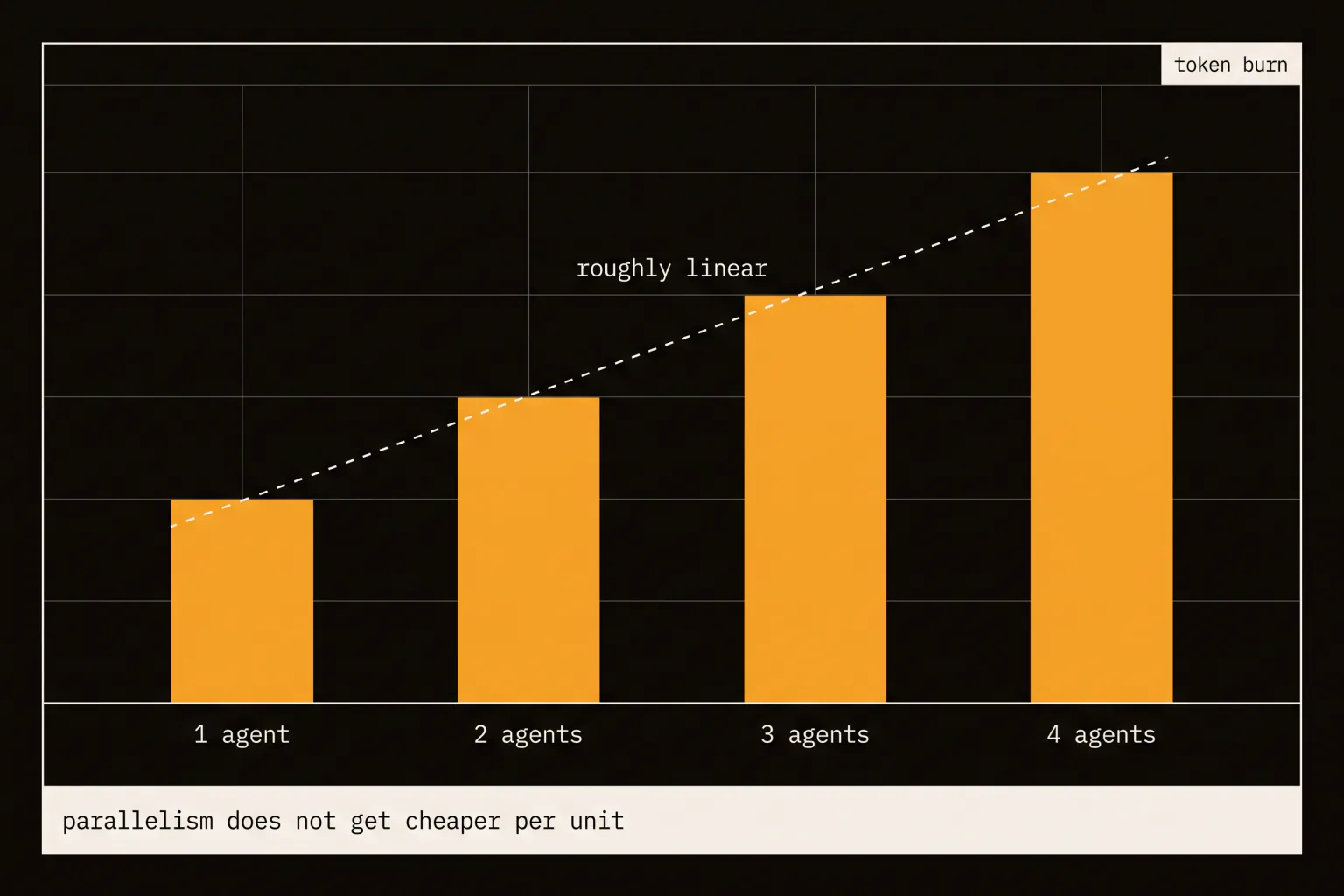
Each agent maintains its own context. Two sessions working on the same repository do not share a cached understanding of it; each reads what it needs, and each pays. So the honest model is that 3 agents cost about 3x one agent, and any intuition about parallelism being cheaper because "it's the same codebase" is wrong.
This is why Claude Code subscription questions and agent-count questions are the same question. If you are running one session at a time, Pro is likely fine indefinitely. If you are genuinely keeping 3 or 4 sessions busy, you are in Max territory not because of any feature gate but because of arithmetic.
Where the tokens actually go
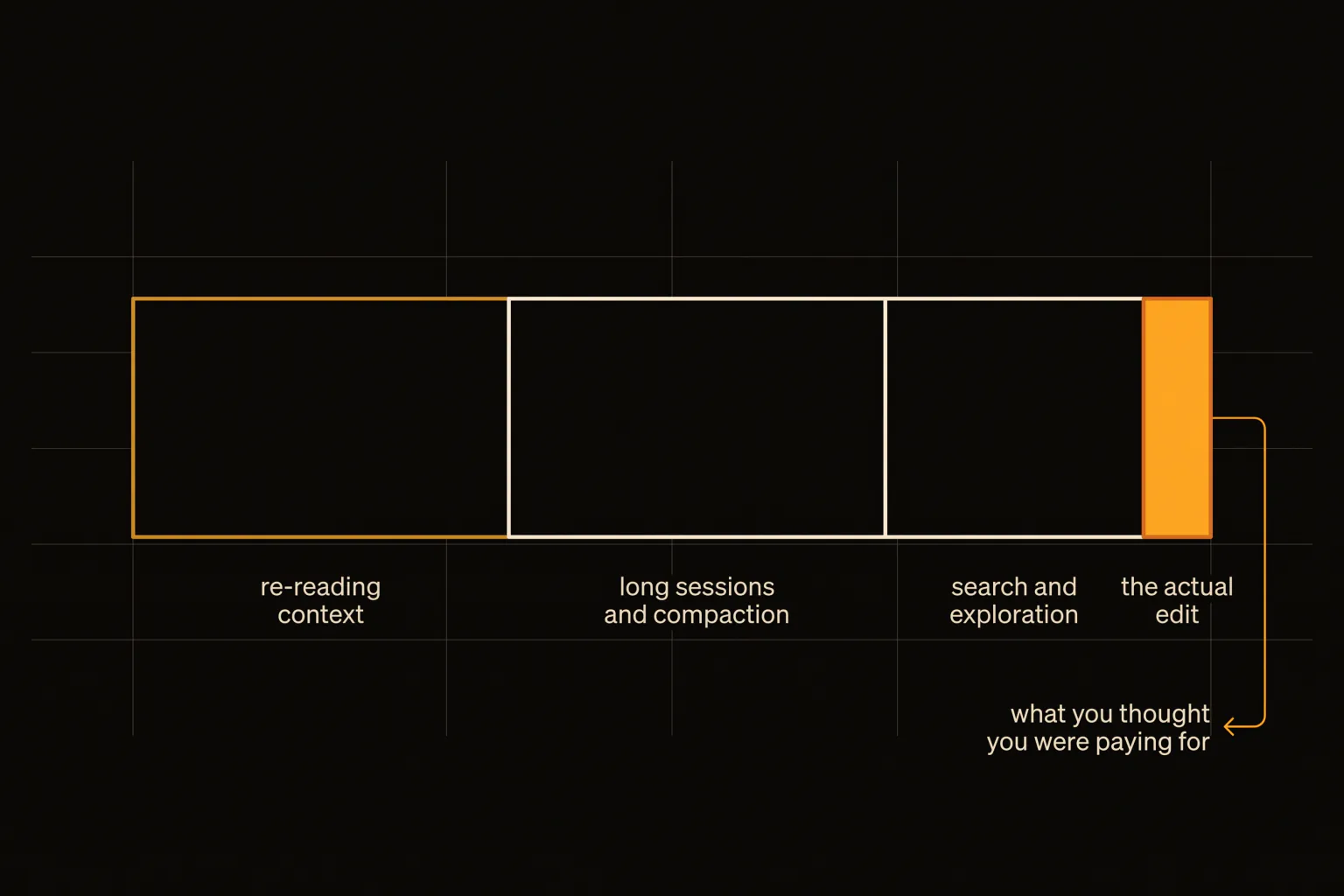
The intuition that writing code is the expensive part is backwards. Most consumption is context: reading files to understand the problem, re-reading after a compaction, exploring to find the right file, and carrying a long conversation forward.
Which gives you four levers, in rough order of effect.
Shorter sessions. A conversation that has run for hours carries its whole history into every subsequent turn. Finishing a task and starting fresh is the single biggest saving available, and it usually improves output quality too.
Cheaper models for search. Finding which of 200 files matters does not need your best model. Our loop system uses a small model for scouting and a stronger one for the actual change, and that split is the main reason running 42 loops is affordable at all.
Subagents for reading. Delegating a wide search to a subagent keeps the file contents out of the main conversation. The parent gets a paragraph instead of 30k tokens of source, and the parent is the context you pay for repeatedly.
A tighter instruction file. Anything loaded every session is billed every session. A 600-line instruction file is a permanent tax, which is why path-scoped rules that load only when relevant are worth the setup.
If you want to see your own Claude Code token usage rather than guess at it, /context shows what is currently occupying the window and how much of it went to instruction files versus conversation. That is the number worth looking at before changing plans, because it tells you whether your problem is volume or waste. A session where 40% of the window is loaded instructions has a configuration problem, not a subscription problem.
One more effect worth naming, because it is invisible until you look for it: an agent that gets a task wrong and redoes it pays twice. Anything that improves first-attempt accuracy — a clearer instruction file, plan mode before a large change, a real test as the gate — reduces Claude Code cost as a side effect. Efficiency and quality point the same direction here, which is unusual and worth exploiting.
What to actually pick
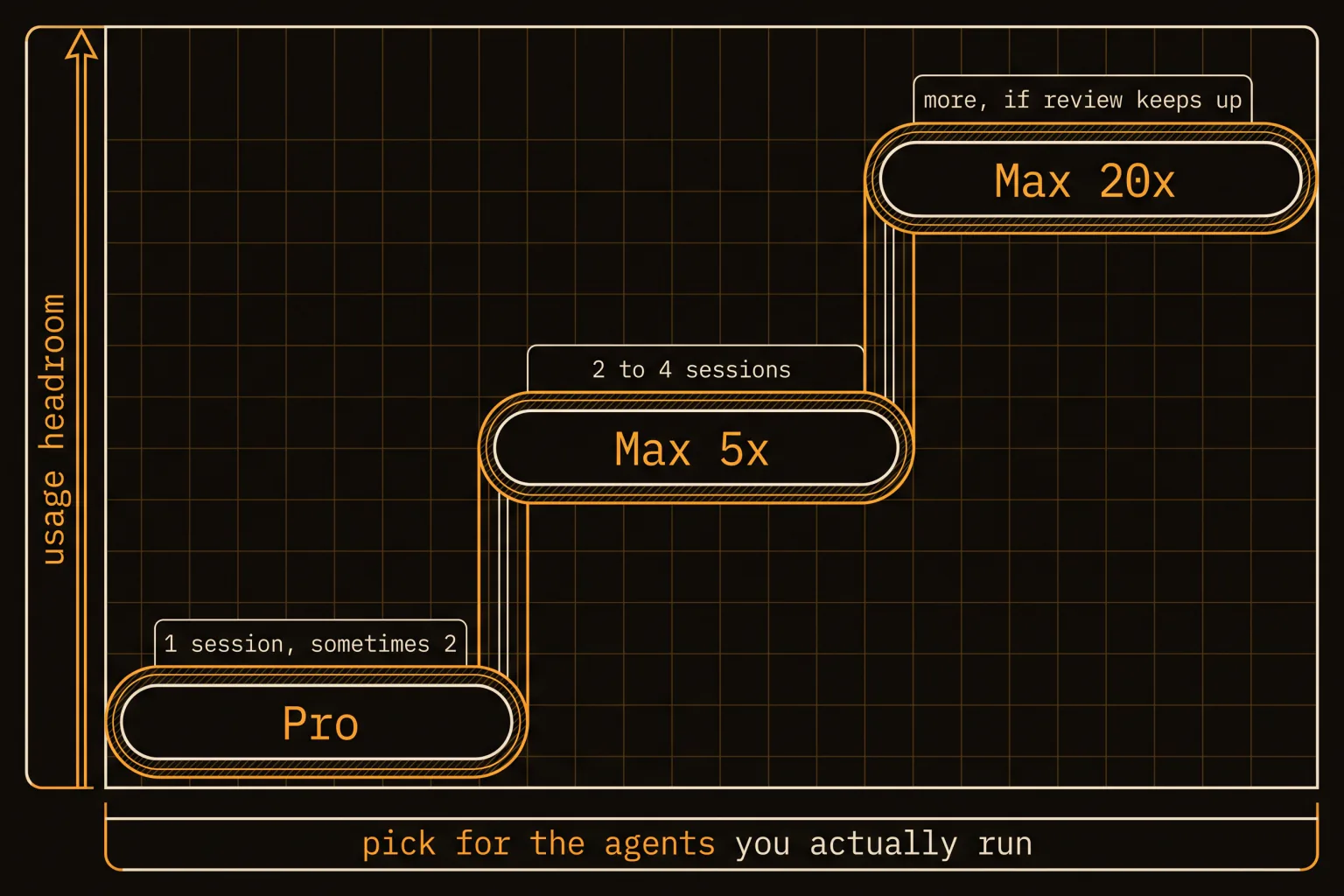
Start on Pro and watch your own limits. If you never hit them, the question is answered and no amount of reasoning about future parallelism should move you.
Move to the Claude Code Max plan when you are regularly hitting limits mid-task, which is the only signal worth acting on. Interruption is the actual cost, not tokens in the abstract — being stopped 40 minutes into a change costs you the context you had built up, and that is worth more than the $80/month difference between tiers if it happens twice a week.
The mistake in the other direction is upgrading in anticipation. A plan bought for the fleet you intend to run next quarter is a plan you are paying for now, and the 5x tier does not become cheaper by sitting unused.
Consider Max 20x when your review capacity genuinely supports several agents working at once. The ceiling on parallel agents is almost never the plan; it is how fast one person can read diffs. We have found the honest number is 3 or 4 concurrent agents before review becomes the bottleneck, and buying more headroom than your review throughput can absorb converts money into an unreviewed backlog.
For teams, note that Team seats include Cowork alongside Claude Code, which is worth factoring in if some of your seats are for people doing document and spreadsheet work rather than coding. Enterprise self-serve is structured differently again, at a per-seat price plus usage-based API costs, so the arithmetic there depends on actual volume rather than a flat tier.
The disclosure
We build SpeakCode, and it is a paid product that runs on top of your own Claude subscription. It does not replace it, reduce it, or give you cheaper tokens. Anyone selling you an orchestrator on the promise of lower model costs is selling you something that does not work that way, and you should ask them to explain the mechanism.
What tooling can honestly affect is the efficiency levers above: making it easy to tier models, to keep sessions short, and to isolate agents so work is not repeated after a collision. That last one is a genuine saving and an underrated one — 2 agents that collide in a shared checkout can lose an hour of work between them, and redone work is paid for twice at full price.
But those savings are modest next to the simplest lever, which no product can sell you: not running a fifth agent you were never going to review. Tooling makes concurrency easier, and easier concurrency is how people end up on a plan they did not need. That is worth saying out loud given what we make.
The API is a different question
Worth a short note because it comes up. Everything above is about subscription plans, where you pay a flat monthly rate for an allowance. Using Claude Code against the Anthropic API instead means paying per token with no allowance at all, which changes the shape of the decision completely: there is no limit to hit mid-task, and no ceiling on a bad month either.
For most individuals the subscription is the right structure precisely because it caps the downside. The per-token route makes sense when usage is spiky, when it needs to be attributed to specific projects or clients, or when the work runs in automation whose volume you control. Enterprise self-serve sits between the two, with a per-seat price plus usage-based API costs on top.
Answer the concurrency question first
Write down how many agents you will actually keep busy this month, and be pessimistic, because the number is usually smaller than the ambition. Then pick the cheapest plan that covers it, and revisit when you start getting interrupted mid-task rather than when you start imagining a fleet.
A concrete starting point: stay on Pro for a month while actually watching /context and noting every time you get interrupted mid-task. If that happened 0 times, you have your answer and you saved $80/month. If it happened weekly, upgrade and stop thinking about it.
Prices and tier multipliers change; the structure of the problem does not. Cost tracks concurrency, per-unit cost is roughly flat across tiers, and the biggest saving available to almost everyone is ending sessions sooner rather than buying more room to run long ones.